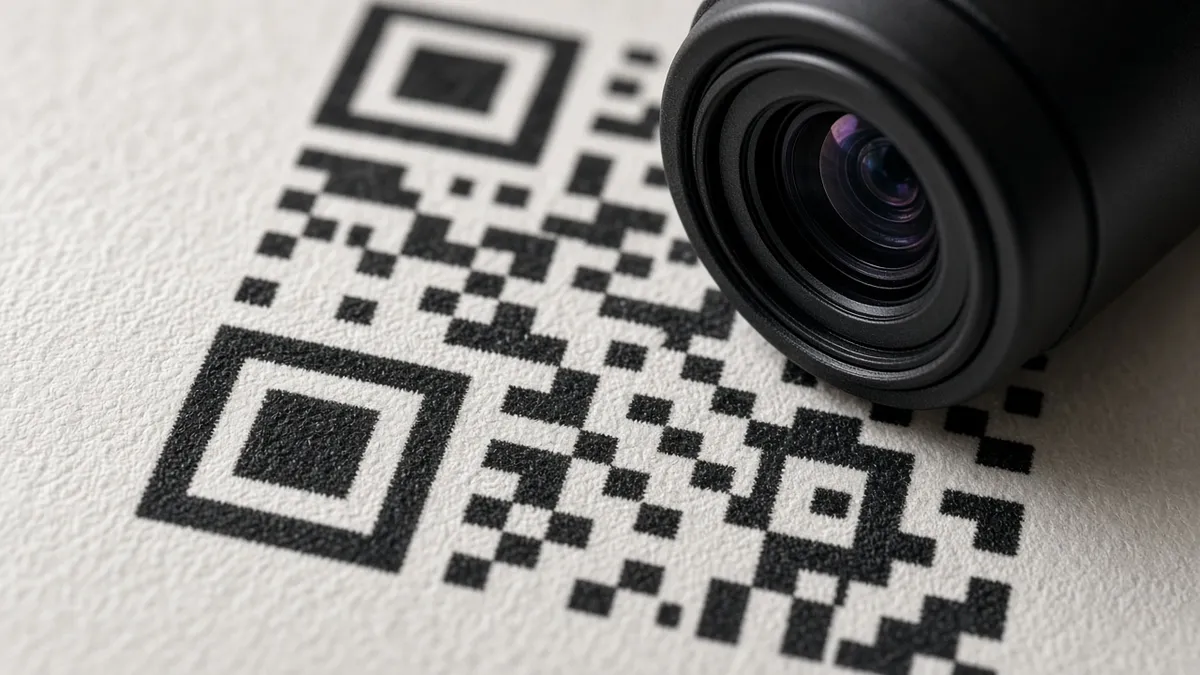
A QR code (Quick Response code) is a square barcode made of black and white modules arranged on a grid. Instead of storing numbers like a traditional barcode, it can hold much more information—most often a URL, contact details, or plain text—in a format that phone cameras can read instantly.
How the pattern stores data
The three large squares in the corners help the scanner find and orient the code. The remaining modules encode the actual message using binary patterns. More data usually means a denser grid, though modern QR versions can store thousands of characters depending on the encoding mode.
What happens when you scan one
Your camera app locates the finder patterns, corrects for angle and blur, then decodes the modules. Built-in error correction lets the code still work if part of it is damaged or covered. Once decoded, the device opens the link, shows the text, or runs the action encoded inside.
Why creators use QR codes
QR codes bridge offline and online: posters, packaging, business cards, and event signage can all point to a bio page, offer, or tracked short link. With DGKad, you can generate QR codes for your links and update the destination later without reprinting—when your short link target changes, the same code keeps working.
Ready to create one? or explore the Tutorial for a full walkthrough.