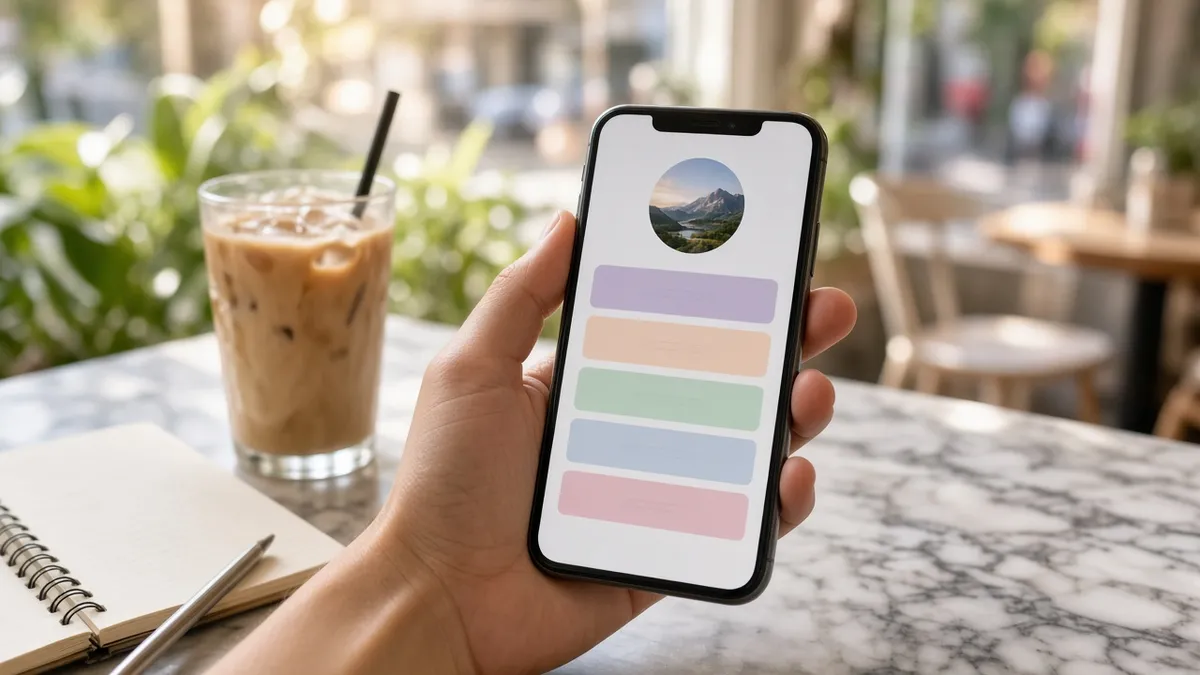
Every major social platform still gives you one outbound link — or a short list buried behind a tap. That single surface is often the highest-intent traffic you get from Instagram, TikTok, Facebook, or a WhatsApp status. People who click are not casually scrolling anymore. They chose to leave the feed and learn what you offer. A link-in-bio page that converts treats that moment seriously.
In 2026, the winning pattern is not a laundry list of every URL you have ever published. It is a focused landing page with one primary job, a clear visual hierarchy, and measurement you can trust. This playbook walks through strategy, layout, tracking, and maintenance for creators, freelancers, and small businesses — especially those who split attention between social clips and real-world customers.
If you already publish on DGKad, pair this article with our guide on bio pages vs link-in-bio tools and the free UTM link generator when you implement the checklist below.
1. Define one primary job before you add links
The most common reason a bio page fails is ambiguity. Visitors arrive and see twelve equal buttons with no story: Shop, Podcast, YouTube, Latest drop, Book a call, Tip jar, Newsletter, Merch, Tour dates, Press kit. Everything looks important, so nothing is.
Before you design anything, finish this sentence: “When someone clicks my bio link, I want them to ______.” Examples:
- Book a consultation for next week
- Buy the featured product from this campaign
- Join the waitlist for a local event
- Download the menu or price list
- Watch the one video that explains the offer
That job becomes your primary call to action (CTA). Every other link is supporting cast. Supporting links can exist — social proof, FAQs, alternate contact methods — but they should not compete visually with the primary CTA.
For seasonal campaigns, swap the primary job instead of stacking more buttons. A Ramadan promo week and a back-to-school week should not share the same hero CTA unless the offer is identical. Temporary bio pages for launches outperform permanent junk drawers.
2. Above-the-fold layout: what visitors see in three seconds
Mobile screens dominate bio traffic. Assume most visitors never scroll. Your above-the-fold block needs four elements:
- Identity — photo or logo, name, one-line descriptor (“Melaka day spa · appointments & packages” beats “Welcome to my page”).
- Primary CTA — one high-contrast button with a verb (“Book on WhatsApp”, “View July menu”, “Get directions”).
- Trust cue — a single line of proof: years in business, star rating source, client count, or location.
- Optional secondary link — only if it helps the primary job (e.g. “See services & prices” below a booking button).
Visual hierarchy matters more than brand colors. Use size and contrast to show what matters. Muted outline buttons for secondary actions; solid fill for the primary action. Avoid three equally loud buttons in a row — eye-tracking studies consistently show users pick the first prominent action or bounce.
Keep line length readable. Short paragraphs and bullet lists survive mobile scanning better than dense biography text copied from your About page on another site.
3. Link order is a conversion lever, not decoration
Order communicates priority even when you think it does not. Put the primary CTA first. Group related links together. Separate “take action” links from “browse” links.
A workable template for local service businesses:
- Book / WhatsApp / Call
- Services & pricing (or menu PDF)
- Location & hours (map link)
- Reviews or portfolio
- Social profiles (optional, lower priority)
A workable template for creators and educators:
- Latest offer or lead magnet
- Featured content (one video or article)
- Newsletter or community
- Shop or affiliate highlight (one item, not a mall)
- Social cross-links
Retire dead links aggressively. A button to a sold-out drop or an expired Google Form teaches visitors that your page is unmaintained. Quarterly, click every link on your bio page from a phone on mobile data, not Wi‑Fi on your desk.
4. Match the bio page to the post that sent the click
Traffic quality rises when the bio page echoes the creative that earned the click. If your reel showcases a RM99 facial package, the bio landing should show that package above the fold — not a generic homepage with twenty services.
Practical tactics without building ten separate sites:
- Campaign blocks — a highlighted section at the top you update weekly.
- Anchor links — one stable bio URL that scrolls to a section ID (
#july-promo). - Short campaign slugs —
/july-facialfor a month, linked from a pinned story while the offer runs.
Creators often underestimate how many visitors arrive with context from only one clip. Assume zero brand memory. Repeat the offer name, price or constraint, and next step in plain language.
5. Bridge offline attention with QR codes
Link-in-bio is not only for social. Flyers, receipts, packaging, event badges, and counter displays can send people to the same focused landing page. QR codes make that handoff frictionless if you respect a few rules.
- Size and contrast — print large enough for arm’s-length scanning; quiet zone around the code matters.
- Test in real lighting — glossy laminate glare kills scans at retail counters.
- Human-readable URL nearby — “Scan or visit dgkad.my/yourpage” rescues failed scans.
- One code per job — do not reuse the same QR for unrelated campaigns if you want clean analytics.
For a deeper technical primer, read how QR codes work and our marketing guide on QR codes for campaigns. Use the QR code reader tool to verify what a printed code resolves to before you commit to a print run.
6. Track bio traffic with UTMs without polluting analytics
If you cannot segment bio traffic, you cannot tell whether Instagram Stories outperform Reels, or whether a collaborator shout-out drove bookings. UTM parameters solve that when you use a consistent naming scheme.
Minimum viable UTM set for bio links:
utm_source— platform (instagram,tiktok,whatsapp)utm_medium— placement (bio,story,qr,email-signature)utm_campaign— initiative (july-facial,launch-week,open-day)
Rules that keep reports readable:
- Lowercase and hyphenated campaign names — stick to one convention.
- Never spaces or special characters in values.
- Document the naming scheme in a shared note so a teammate does not invent
Instagram_Bio_1next week. - Apply UTMs to outbound links you control, not to third-party app deep links that strip parameters.
Our UTM parameters explained guide covers common mistakes (double question marks, overwritten tags, and campaign names that mean nothing six months later). Generate clean URLs with the UTM link generator before you paste into your bio tool.
7. Local businesses: convert proximity into appointments
Local bio pages win when they reduce uncertainty for someone nearby. Searchers and social viewers ask the same silent questions: Are you open? Where exactly are you? How do I book today? Can I trust you?
Strong local bio elements:
- Tap-to-call and WhatsApp with pre-filled greeting text
- Google Maps link with correct pin (verify on foot once)
- Hours with exceptions (“Closed Tuesdays”, “Public holidays by appointment”)
- One photo of the storefront or treatment room — real beats stock
- FAQ for parking, languages spoken, payment methods
Do not hide contact paths behind a membership login. If a visitor needs an account before seeing a phone number, you have rebuilt the friction social platforms were supposed to remove.
When a specific location page already earns search traffic — a spa landing, a café profile, a preschool info page — keep the slug stable and link to it from your bio instead of duplicating content. Consolidation beats cannibalization.
8. Creators and coaches: convert attention into owned audience
Creators face a different job: social platforms rent you reach. A bio page should help you convert rented attention into owned channels — email, community, product waitlists — without feeling like a bait-and-switch.
Patterns that work in 2026:
- One lead magnet with a honest title (“Free 7-day meal prep planner”) instead of vague “Subscribe”.
- Proof adjacent to CTA — testimonial snippet, subscriber count if truthful, sample lesson link.
- Content hub link — send people to one canonical post or playlist, not six stale uploads.
- Transparent pricing for services — “From RM X” filters unqualified leads before they DM you.
Avoid auto-playing media, aggressive pop-ups, and countdown timers that reset daily. Those tricks erode trust faster on bio traffic than on cold search traffic because the visitor already chose you from a personal brand context.
9. Technical hygiene so clicks do not die on the way
A beautiful bio strategy fails if the link chain is broken. Run these checks monthly:
- Redirect chains — use the URL redirect checker to confirm one hop to the final page.
- HTTPS everywhere — mixed-content warnings scare mobile users.
- Meta tags — when someone shares your bio URL in iMessage or Slack, preview title and image should look intentional. Inspect with the meta tags checker.
- Load time on 4G — compress hero images; defer non-critical scripts.
- 404 and malware paths — inherited domains sometimes carry old hacked URLs. Remove or hard-404 them before you drive fresh traffic.
Before publishing campaign links broadly, follow our check your links before you publish checklist — especially when a QR code will be printed thousands of times.
10. Measure what matters, not vanity taps
Link click counts inside a bio tool are a start, not the finish line. Layer metrics:
- Platform analytics — bio link taps, story link stickers, QR scans if available
- Web analytics — sessions on the landing page segmented by UTM source/medium
- Business events — bookings, orders, form submits, calls longer than 30 seconds
- Search Console — branded queries rising after campaigns indicate memory, not just one-off clicks
Review weekly during active campaigns; monthly during maintenance periods. Compare conversion rate by source, not raw clicks alone. A smaller TikTok audience that converts at 8% beats a larger Instagram audience at 0.4% if your goal is appointments.
When a source underperforms, fix message match first (does the landing echo the creative?), then CTA clarity, then link order. Only then test cosmetic changes like button color.
11. Maintenance cadence: treat the bio page like a product
Static bio pages decay. Assign a lightweight maintenance ritual:
Weekly (5 minutes during active promos)
- Primary CTA still correct?
- Promo dates and prices accurate?
- Story deep links still valid?
Monthly (15 minutes)
- Click every link on a phone
- Archive expired campaigns from the top section
- Refresh one proof element (review, photo, stat)
Quarterly (30 minutes)
- Re-read the page as a first-time visitor
- Merge duplicate links; remove unused social icons
- Audit UTMs in analytics — rename confusing campaigns going forward
- Check Search Console for new queries you could answer with an FAQ block
Pages maintained on this cadence rarely need full redesigns. They evolve with your offers instead of rotting into link graveyards.
12. Common mistakes to retire in 2026
- Everything-is-bold syndrome — if every button shouts, none do.
- Duplicate destinations — three buttons to the same shop homepage.
- Login walls — requiring accounts before showing contact info.
- Autoplay video heroes — slow, distracting, and costly on mobile data.
- Unlabeled link icons — mystery meat navigation hurts accessibility and trust.
- Ignoring international visitors — if you serve tourists, state currency, languages, and booking channels clearly.
- Set-and-forget QR prints — codes pointing to expired campaigns on permanent signage.
Fixing any two of these on an existing page often lifts conversion more than a full rebrand.
Conclusion
A link-in-bio page converts when it respects the visitor’s intent: one clear job, honest copy, fast loading, and tracking you will actually review. Social platforms change algorithms; the habit of sending people to a focused landing page you control compounds over years.
Start small: pick one primary CTA, reorder your links, add UTMs to the destinations you own, and schedule a monthly link audit. Expand into QR bridges and campaign-specific sections as you learn which sources drive real outcomes.
On DGKad, continue with the bio pages guide, QR marketing guide, and UTM guide — then use the WhatsApp link generator and UTM link generator to ship improvements this week, not next quarter.